Staying Up Late to Feel Alive: The Exhausted American's Quiet Act of Rebellion
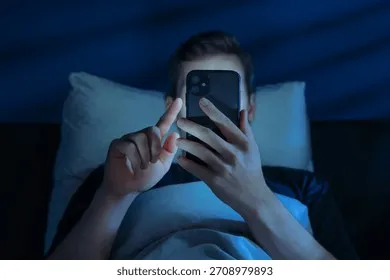
Photo: person awake late night scrolling phone in dark bedroom, via www.shutterstock.com
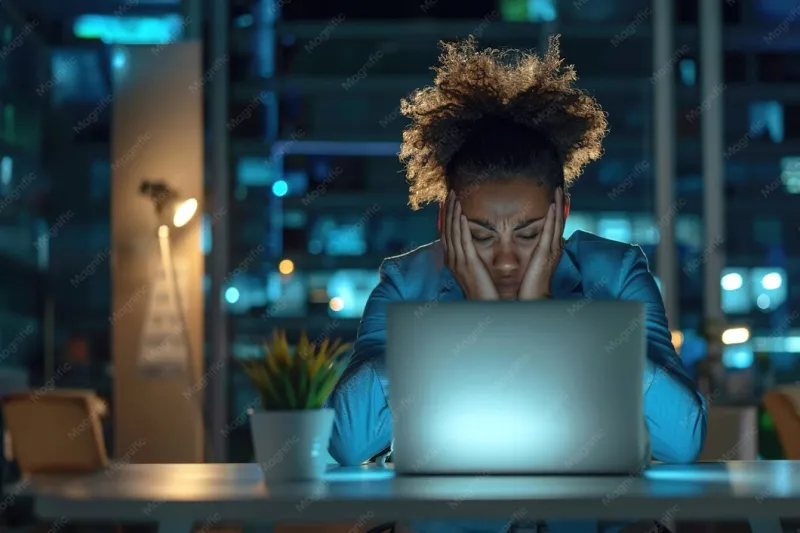
It's 11:47 p.m. on a Tuesday. You have to be up at 6:30. You are genuinely, bone-deep tired. And yet — here you are, three episodes into a show you've already seen, scrolling through videos of strangers' home renovations, or just lying in the dark with your phone held six inches from your face like a modern campfire.
You're not broken. You're not uniquely undisciplined. You're doing what tens of millions of Americans do every single night: stealing time back from a day that never gave you enough of it.
This is revenge bedtime procrastination. And it's quietly becoming one of the defining behaviors of the burned-out American adult.
What Even Is Revenge Bedtime Procrastination?
The term sounds academic, but the feeling is instantly recognizable. Psychologists describe it as the act of deliberately delaying sleep in order to reclaim personal time — usually after a long day dominated by work, caregiving, or other obligations that left zero room for anything enjoyable.
The "revenge" part is intentional. It's not passive insomnia. It's not anxiety keeping you awake. It's a conscious choice — even if it's one you'll regret at 6:29 a.m. — to say: the rest of the day belonged to everyone else. This hour is mine.
The concept gained real traction in the U.S. around 2020, when pandemic-era work-from-home culture blurred the line between professional time and personal time so completely that many people felt like they were always working, even when they technically weren't. The boundaries dissolved. The commute disappeared. And somehow, instead of getting more free time, people got less of it — because home became the office, and the office never really closed.
Staying up late became the loophole.
The Numbers Are Kind of Alarming
The American sleep situation was already not great before smartphones made every couch a cinema and every bedroom a scroll-hole. The CDC has long flagged insufficient sleep as a public health concern, with roughly one in three American adults regularly getting less than the recommended seven hours a night.
More recent data paints an even messier picture. A 2023 survey from the American Academy of Sleep Medicine found that nearly half of Americans reported feeling sleepy during the daytime at least three days a week. Separate research from Gallup found average sleep duration among U.S. adults trending downward year over year.
And while there are plenty of factors feeding into that — stress, health conditions, shift work — the rise of intentional late-night screen time is increasingly showing up in the data as a significant contributor. We're not just accidentally staying up. We're choosing to.
Why Saying No to Sleep Feels Like Saying Yes to Yourself
Here's where it gets genuinely interesting, because this isn't just a bad habit with a catchy name. There's real psychology at work.
For a lot of Americans — particularly parents, caregivers, and people in demanding jobs — the evening hours after 10 p.m. represent the only unscheduled time in a 24-hour period. No meetings. No requests. No one asking anything of you. The house is quiet. The phone (mostly) stops.
In that context, going to sleep on time doesn't feel like self-care. It feels like surrender. It feels like the day won.
Dr. Camille Lassale, a behavioral scientist who has studied sleep and well-being, has described this pattern as a form of compensation — the mind seeking balance when it hasn't received adequate rest or leisure during waking hours. You didn't get to read. You didn't get to watch anything you wanted. You didn't get to just exist without a task attached. So your brain refuses to shut down until you've had at least a taste of that.
The cruel irony, of course, is that the more you do this, the more exhausted you become, the harder it gets to actually enjoy your daytime hours, and the stronger the pull to stay up late becomes. It's a loop. A very tired, very relatable loop.
The Doom Scroll as Emotional Junk Food
The phone doesn't help. Let's be honest about that.
Revenge bedtime procrastination and doom scrolling have a complicated relationship. Sometimes the late-night phone use is purposeful — you're watching a show you chose, reading something you're genuinely interested in, texting a friend in a different time zone. That's leisure. Weird, sleep-depriving leisure, but leisure.
But a lot of the time, the late-night scroll is more reflexive than intentional. You're not really watching anything. You're just... consuming. Absorbing. Letting the algorithm feed you an endless succession of content that requires zero effort and provides minimal satisfaction.
Sleep researchers describe this as a form of emotional numbing rather than genuine relaxation. The brain is overstimulated but under-fulfilled. You stay up an hour longer than you meant to and somehow feel less rested than if you'd just gone to sleep — but also strangely reluctant to put the phone down.
The blue light issue is real too, suppressing melatonin production and convincing your brain it's still afternoon when it is very much not. But honestly, the algorithmic pull is probably doing more damage than the wavelength of light.
The Hidden Price Tag
Chronically cutting sleep short doesn't just make you groggy. The downstream effects are significant and well-documented: impaired memory and focus, weakened immune response, elevated cortisol, increased risk of anxiety and depression, worse cardiovascular outcomes over time. Sleep deprivation is one of those things where the cost feels invisible right up until it doesn't.
And yet — knowing all of this, most people still do it. Because the alternative feels like giving up the only part of the day that felt like theirs.
That tension is the whole story, really. It's not a willpower failure. It's a structural problem wearing the costume of a personal one.
So What Do You Actually Do About It?
The honest answer is: probably not what the sleep hygiene articles tell you. "Just put the phone in another room" and "establish a wind-down routine" are fine suggestions, but they don't address the underlying issue — which is that people are staying up late because their days aren't giving them enough space to breathe.
The more useful question might be: where else in the day can you carve out 20 minutes that's genuinely yours? A lunch break that's actually a break. A morning walk before the notifications start. A commute with headphones and no work emails. Small pockets of reclaimed time distributed through the day can reduce the pressure valve that explodes at 11:30 p.m.
Also: not every night has to be a full reset. Giving yourself one or two designated late nights a week — guilt-free, planned — takes some of the compulsive edge off. It stops being a rebellion and starts being a choice. That shift matters more than it sounds.
But if tonight you're still awake at midnight watching something you've already seen three times because the day was long and the couch is comfortable and this hour is the only one that felt like yours?
No judgment here. Just maybe set the phone down eventually.