Planes, Trains, and Maxed-Out Credit Cards: America's Post-Pandemic Travel Obsession
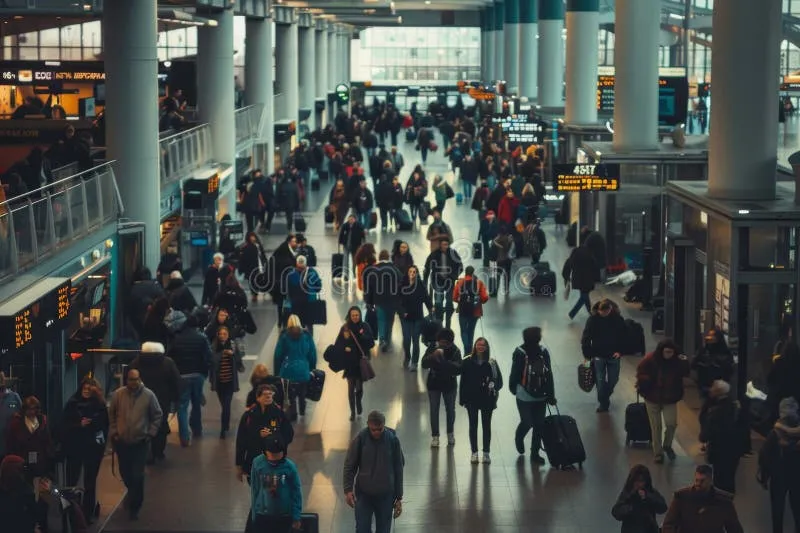
Photo: crowded airport terminal American travelers luggage vacation summer, via thumbs.dreamstime.com
Let's paint a picture. It's a Tuesday morning at O'Hare. The security line stretches so far back it's practically in the parking garage. A couple nearby is arguing about whether they have time to grab Garrett Popcorn before their gate closes. A solo traveler is on the phone, loudly negotiating a hotel upgrade. And somewhere in the distance, a child is screaming at a volume that suggests they, too, did not enjoy the $47 airport sandwich they just ate.
Welcome to American travel in 2024. It's chaotic, expensive, occasionally miserable — and people absolutely cannot get enough of it.
Where This Whole Thing Started
The term "revenge travel" sounds like something a scorned ex would do, and honestly, that's not far off. The idea is simple: after years of canceled trips, grounded flights, closed borders, and living vicariously through other people's Instagram vacation posts, millions of Americans decided they were owed something. The world owed them a beach. A European cobblestone street. A national park at golden hour. And they were going to collect — budget be damned.
The numbers back this up in a big way. The U.S. Travel Association reported that domestic travel spending hit record highs in 2023, surpassing pre-pandemic levels by a significant margin. International departures from U.S. airports also rebounded sharply, with the TSA screening more than 2.9 million travelers on single days during the summer of 2023 — figures that were unthinkable just three years earlier.
Airlines, for their part, have been absolutely printing money. Delta, United, and American Airlines all posted massive profits, with executives on earnings calls practically giddy about what they were calling "unprecedented leisure demand." Translation: you're spending a lot, and they noticed.
The Psychology of "I Deserve This"
So what's actually driving people to drop $6,000 on a trip to Italy when their savings account is giving them side-eye? It's more complicated than just "people like vacations."
Psychologists point to something called temporal discounting — our tendency to value experiences in the near future more intensely after a period of deprivation. The pandemic essentially hit a giant pause button on life's highlight reel. Weddings got postponed. Milestone birthdays were spent on Zoom. Anniversaries were celebrated in living rooms. When restrictions finally lifted, the pent-up desire to do something didn't just return — it came back louder and more urgent.
There's also a heavy dose of FOMO baked into the equation. Social media, which people were consuming at record rates during lockdowns, was suddenly flooded again with travel content. Friends posting from Santorini. Cousins hiking in Patagonia. Coworkers doing wine tours in Napa. For a lot of Americans, sitting that out felt psychologically impossible — even when it was financially questionable.
Dr. Carolyn Mair, a behavioral psychologist who studies consumer decision-making, describes it as a "now or never" mentality. The pandemic reminded people in a very visceral way that circumstances can change overnight. That trip you kept saying you'd take "someday"? The pandemic taught a lot of people that someday isn't guaranteed.
The Luxury Surge Nobody Saw Coming
Here's the twist that even travel industry insiders didn't fully predict: this wasn't just a boom in budget travel. Americans didn't just want to go somewhere — they wanted to go nicely.
Luxury travel has seen some of the sharpest growth of any category. Virtuoso, a network of luxury travel agencies, reported that bookings for high-end trips grew by double digits year over year, with clients requesting upgrades, private tours, and experiences that would have felt extravagant even before 2020. River cruises, boutique safari lodges, overwater bungalows in the Maldives — all of it sold out faster than ever.
Even travelers who wouldn't typically describe themselves as "luxury" travelers started spending up. Airlines reported that premium cabin bookings — business class, first class, premium economy — surged dramatically, with many routes selling out months in advance. People who had spent two years staring at their ceilings were apparently willing to spend real money to not stare at the back of a headrest for eight hours.
Hotels caught on fast. The "experience economy" became a buzzword in hospitality boardrooms. Properties started packaging trips around specific experiences — cooking classes, foraging tours, exclusive access to cultural events — and charging accordingly. The logic: if you're already spending $400 a night, what's another $150 for a private sunset sail?
Who's Actually Paying for All This?
Here's where the story gets a little complicated. Not everyone fueling this boom is doing so from a position of financial comfort.
A 2023 Bankrate survey found that nearly 40% of Americans who took vacations went into debt to pay for them. Credit card balances tied to travel spending climbed sharply, and "buy now, pay later" services began partnering aggressively with travel booking platforms. Klarna, Affirm, and similar services started showing up at checkout on flight and hotel sites, making it easier than ever to book a trip you technically can't afford yet.
Travel companies aren't exactly discouraging this. Airline credit cards with massive sign-up bonuses are being marketed harder than ever. Hotel loyalty programs have become increasingly sophisticated at nudging members toward premium tiers. The message, subtle but consistent, is: you've waited long enough, and there are flexible payment options.
For some travelers, this is fine — a manageable splurge with a clear payback plan. For others, it's a financial hangover waiting to happen.
Is the Boom Built to Last?
Travel economists have been asking this question for a couple of years now, and the honest answer is: probably not at this intensity, but don't expect a crash either.
The most widely held view is that we're in a normalization phase — that the fever pitch of revenge spending will gradually cool as the emotional urgency fades. People who took their "bucket list" trip in 2022 or 2023 are starting to feel less compelled to do it again immediately. The FOMO is quieting. The debt is registering.
Airline executives have already started hedging their language slightly, acknowledging that while demand remains strong, the extraordinary premiums consumers were willing to pay are beginning to soften. Hotel rates in some markets have started to plateau after years of aggressive increases.
There's also a broader economic question hanging over the whole thing. If a recession bites harder than expected, discretionary travel — especially luxury travel — tends to be one of the first things people cut. The industry is watching consumer debt levels and interest rates closely.
But here's the thing: travel has fundamentally changed in how Americans think about it. The pandemic didn't just create a temporary surge in demand — it reshuffled priorities for a lot of people. Surveys consistently show that Americans, particularly younger generations, now rank travel experiences above material purchases when allocating discretionary income.
The revenge might cool off. The wanderlust, though? That's probably here to stay.
Just maybe book the economy seat this time. Your credit card will thank you.