Ghost Charges: The Forgotten Apps Quietly Draining Your Bank Account Every Month
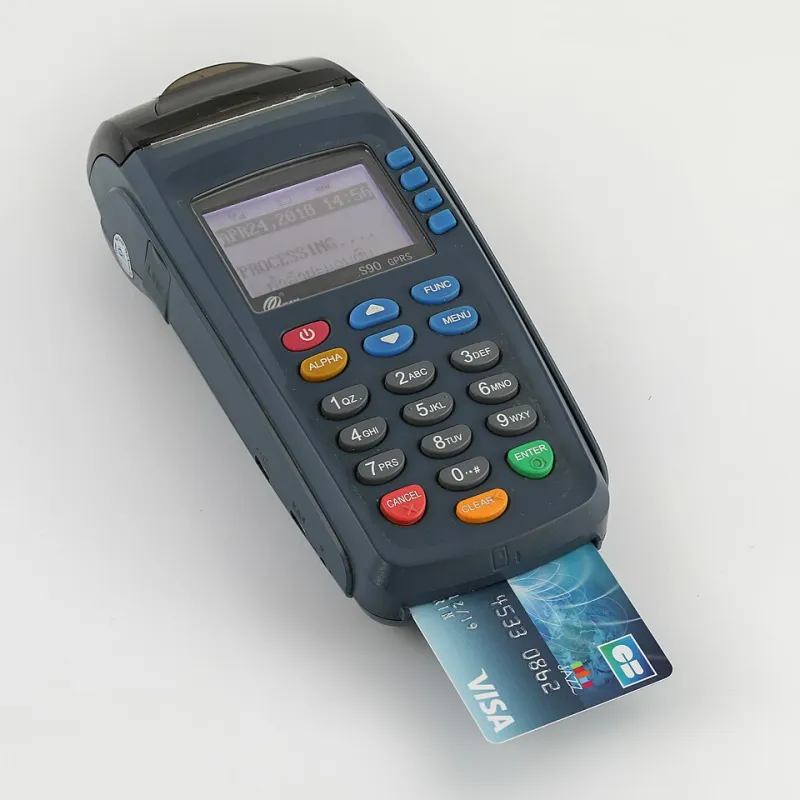
Photo: Basile Morin, CC BY-SA 4.0, via Wikimedia Commons
Somewhere between that meditation app you downloaded during a rough week in 2021 and the cloud storage service you signed up for on a free trial, your bank account started bleeding out. Not dramatically — not in a way that sets off alarms or makes you call your bank in a panic. Just quietly. Steadily. $4.99 here. $12.99 there. A $19.99 charge from a company whose name you vaguely recognize but can't quite place.
Welcome to the ghost economy of forgotten subscriptions, and there's a very good chance you're already living in it.
The Numbers Are Genuinely Alarming
A 2022 survey by C+R Research found that the average American underestimates their monthly subscription spending by nearly $133. People guessed they were spending around $86 a month on subscriptions. The actual average? Close to $220. That's not a rounding error — that's a whole separate utility bill hiding in plain sight.
And it's not just streaming services, which are at least visible enough that people notice when they're paying for three different platforms simultaneously. The real money-bleeders are the smaller, easier-to-forget charges: fitness apps, recipe generators, VPN services, password managers, stock photo sites, language learning platforms, and productivity tools that seemed essential for exactly one week in March of whatever year it was.
Most people have somewhere between 6 and 12 active subscriptions at any given time. A significant chunk of those are services they haven't touched in months.
Why You Forgot — And Why That Was Kind of the Point
Here's the thing about the subscription model that doesn't get talked about enough: a lot of it is engineered around your tendency to forget. That's not a conspiracy theory — it's just good business, at least from the company's perspective.
Free trials are the most obvious example. Sign up, enter your credit card, get 30 days of access, and then forget to cancel before the billing cycle kicks in. By the time you notice the charge, you've already been billed for a month you didn't use. The company made money on your inattention, and depending on how annoying the cancellation process is, they might make money on the next month too.
Then there's the practice of burying cancellation options deep inside account settings — sometimes requiring multiple confirmation screens, a phone call, or even a chat with a retention specialist whose entire job is to talk you out of leaving. Some companies have faced regulatory action over these tactics. The FTC has been increasingly vocal about so-called "dark patterns" in subscription services, and in 2023 proposed stricter rules requiring that cancellation be as easy as sign-up. But enforcement is slow, and in the meantime, the charges keep hitting.
Smaller charges are also psychologically easier to ignore. A $4.99 monthly fee barely registers on a bank statement. It's below the threshold where most people think "I should look into this." Companies know this. Pricing a subscription at $4.99 instead of $5.00 isn't just about seeming cheaper — it's also about staying invisible.
The Apps Most Likely Haunting Your Statements
Not all forgotten subscriptions are created equal. Some categories are particularly notorious for accumulating in the background:
Fitness and wellness apps — Downloaded during a New Year's resolution push or a stressful period when you were convinced a guided breathing exercise would fix everything. Used for two weeks. Still billing.
Cloud storage upgrades — You hit the free limit on Google Photos or iCloud, panicked, and upgraded to a paid tier. The panic passed. The billing didn't.
News and magazine subscriptions — Signed up during a major news cycle when you felt compelled to be informed. The news cycle ended. The subscription didn't.
Creative tools — Stock photo sites, font libraries, video editing platforms. Signed up for one project. The project wrapped up months ago.
Gaming and entertainment add-ons — In-app purchases that unlocked recurring billing, or premium tiers of free games you don't play anymore.
"Lifetime" deals that weren't — Services that rebranded, pivoted, or quietly introduced new paid tiers after you thought you'd paid once and were done.
How to Actually Audit Your Subscriptions
The good news is that getting a handle on this stuff isn't as complicated as the companies would like you to think. It just requires a little deliberate effort.
Start with your bank and credit card statements. Go back three months and look for any recurring charge, no matter how small. Write down the company name and the amount. If you don't recognize something, Google the exact name that appears on the statement — many companies bill under a different name than their app or service.
Check your email for subscription confirmations. Search your inbox for phrases like "your subscription," "billing confirmation," "renewal notice," and "free trial." This often surfaces services you've completely forgotten about.
Use your phone's built-in subscription management. Both iOS and Android have settings menus that show you active subscriptions tied to your Apple ID or Google account. Go to Settings > [your name] > Subscriptions on iPhone, or the Google Play Store under Subscriptions on Android. These won't catch everything — anything billed directly through a website won't show up — but they catch a lot.
Try a third-party tracker. Apps like Rocket Money, Trim, or even some features built into banking apps like Chase and Bank of America can scan your transactions and flag recurring charges automatically. Some of these services will even handle cancellations on your behalf, though read the fine print — a few of them charge for that feature.
Set a calendar reminder. After you audit, set a recurring reminder every three months to do it again. Subscriptions have a way of accumulating quietly in the gaps between check-ins.
The Mindset Shift That Actually Helps
Beyond the practical steps, there's a useful reframe here. Think of subscriptions less like one-time purchases and more like tiny ongoing contracts. Before you sign up for anything with a recurring charge — even a free trial — ask yourself whether you'd remember to cancel it if you stopped using it after a week. If the honest answer is probably not, that's useful information.
The subscription economy isn't going away. If anything, it's expanding. More software, more entertainment, more services are moving to recurring billing models because they're more financially stable for companies than one-time sales. That's fine. But it does mean the responsibility for tracking this stuff falls increasingly on consumers, because the companies certainly aren't going to make it easy.
Your bank account has a better memory than you do. The charges are all there, sitting in the statement, waiting to be noticed. The ghost economy only survives because most people never look.