Caught in the Scroll: Why Your Brain Can't Quit the Feed
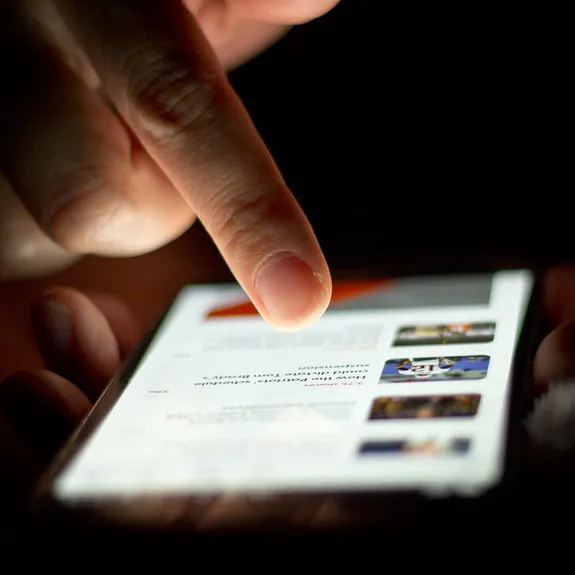
Photo: Japanexperterna.se, CC BY-SA 2.0, via Wikimedia Commons
You Didn't Lose Track of Time. The App Did It for You.
Let's be honest: nobody opens Instagram intending to spend half an hour watching strangers' vacation reels. Nobody fires up TikTok thinking, yeah, I'll just burn through dinner. And yet, here we are — collectively logging billions of hours a week on platforms designed, from the pixel level up, to make leaving feel genuinely difficult.
This isn't a willpower problem. It's an architecture problem. The feeds we scroll through every day aren't random. They're precision-tuned systems built on decades of behavioral research, A/B testing, and a surprisingly deep understanding of how the human brain chases reward. If you've ever wondered why doom-scrolling feels almost involuntary, the answer lives somewhere between Silicon Valley and your dopamine receptors.
The Slot Machine in Your Pocket
Back in the 1950s, psychologist B.F. Skinner ran a now-famous experiment: he found that animals pressed a lever more compulsively when rewards came unpredictably — sometimes, not every time. This "variable reward schedule" turned out to be wildly more addictive than consistent rewards.
Fast forward about 70 years, and that exact principle is baked into every major social feed. When you pull down to refresh your Twitter (or X, whatever) timeline, you're essentially pulling a slot machine lever. Sometimes you get a great post. Sometimes it's boring. Occasionally it's something that makes you laugh out loud. That unpredictability is the whole game — and platforms know it.
Former Google design ethicist Tristan Harris spent years inside the tech industry calling this out. He's described smartphones as "a slot machine in our pocket" and pointed out that the people building these systems are deeply aware of the psychological hooks they're deploying. This isn't conspiracy talk — it's documented product strategy.
Infinite Scroll: The Feature That Removed the Exit
Here's a fun fact: Aza Raskin, the designer credited with inventing infinite scroll, has publicly said he regrets it. His original goal was to make browsing smoother — no clicking to the next page, just seamless content. What he didn't fully anticipate was that removing natural stopping points would eliminate the moments where people naturally ask themselves, wait, should I keep going?
Old-school websites had pagination. You'd reach the bottom of a page, see "Page 2," and that tiny pause gave your brain a chance to check in. Infinite scroll killed that pause entirely. The content just... keeps coming. There's no bottom. There's no "you've reached the end." There's only more.
Combine that with autoplay video — YouTube, Netflix, TikTok all do this — and you've got a system that actively fights your ability to stop voluntarily.
The Algorithm Knows You Better Than Your Best Friend
Modern recommendation algorithms don't just show you content you've liked before. They model you. They track how long you pause on a video, whether you rewatch a clip, how far you scroll past something before stopping, and even the time of day you're most likely to engage. Over time, these systems build a behavioral fingerprint that's remarkably accurate at predicting what will keep you watching.
Meta, TikTok, and YouTube have all faced scrutiny for the fact that their engagement-optimizing algorithms tend to push increasingly extreme or emotionally charged content — because that stuff performs. Outrage, awe, fear, and laughter are all high-engagement emotions. A mildly interesting post about local weather? Not so much. A clip that makes you furious or deeply sad? That gets shared, commented on, and watched again.
Researchers at MIT found that false news travels about six times faster on social platforms than accurate news — partly because false stories tend to be more emotionally provocative. The algorithm isn't biased toward lies, exactly. It's biased toward reaction, and sensational content just happens to generate more of it.
Notifications: The Tiny Interruptions That Add Up
Beyond the feed itself, notifications are their own manipulation layer. Every ping, badge, or banner is a micro-interruption designed to pull you back into the app. Research from the University of California, Irvine, found that it takes an average of 23 minutes to fully regain focus after an interruption. Multiply that by the dozen-plus notifications the average American gets per hour, and you start to understand why productivity feels so slippery.
Platforms have also gotten clever about when they notify you. If you post something and immediately get a like notification, you're rewarded quickly. But platforms sometimes hold back additional likes and deliver them in a batch later — again, variable reward scheduling — to bring you back to the app at a different time.
So What Can You Actually Do About It?
Here's the part where we give you the practical stuff, because understanding the problem is only half the battle.
Turn off non-essential notifications. Seriously, all of them. Keep calls and direct messages if you want, but app badges and push alerts for likes and comments are almost never urgent and almost always disruptive.
Set screen time limits with real friction. Apple's Screen Time and Android's Digital Wellbeing both let you cap app usage. The key is making the override annoying enough that you'll actually pause before blowing past it.
Use grayscale mode. This sounds weird, but color is a huge part of what makes apps visually stimulating. Switching your phone to grayscale (you can do it in accessibility settings on both iOS and Android) makes the screen dramatically less appealing.
Create physical distance. Keep your phone out of the bedroom. Charge it in another room. The fewer times it's within arm's reach, the fewer times you'll mindlessly pick it up.
Be skeptical of content that makes you furious. Not because you shouldn't care about things — but because outrage-bait is a real content genre designed specifically to spike your engagement. Pause before you share.
The Bigger Picture
None of this is meant to make you feel helpless. Knowing how these systems work is genuinely empowering — once you see the levers being pulled, you can start to pull back. Tech companies aren't going to redesign their platforms out of the goodness of their hearts; engagement is how they make money. But that doesn't mean you're stuck.
Your attention is worth a lot to a lot of companies. Treating it like a resource worth protecting — rather than something to burn through on autopilot — might be one of the more valuable habits you can build in 2024. The algorithm never sleeps. But you can still decide when to put the phone down.